
What Ancient Temples Knew That Modern Spiritual Art Forgot
Jan 07, 2026When you've been walking the conscious path for a while, something shifts in how you experience beauty. You can sense whether art carries actual presence or simply represents spiritual concepts. You've developed discernment about what genuinely supports your practice versus what decorates your walls with good intentions.
Maybe you've stood in front of spiritual art that looks beautiful (the right symbols, spiritual imagery, meaningful colors) but you're not quite connecting to it. Its like it's pointing at something rather than being something. Nothing wrong with it, just not quite what you're seeking.
What you're sensing is an ancient gap, something temple builders and priests understood intimately that modern spiritual art has forgotten.
I believe every expression serves its purpose at the right phase of the journey. But somewhere along your path, you might find yourself wanting something deeper. Instead of symbols pointing to the divine, you want beauty that creates direct access to it.
The Ancient Understanding We Lost
There's a reason we keep returning to ancient wisdom, even with all the 'new knowledge' we claim to have. Each discovery reminds us the ancients were already exploring truths we're just beginning to uncover.
Today, many on the spiritual path find themselves drawn to art that represents sacred concepts. In a way, it mimics what we see in ancient art: the gods carved into Egyptian temple walls, the geometric patterns of Greek sacred architecture.
Yet there was far more than meets the eye in Hellenistic Egyptian and ancient Greek art. Something deeper which modern spiritual art has forgotten.
Ancient civilizations created complete integrated systems where beauty, architecture, ritual, and sacred objects worked together to facilitate direct consciousness transformation.
That systematic approach has been lost.
What Temples Actually Knew
A 2025 Oxford study by Dr. Juan de Lara, a specialist in Greek temple lighting, revealed what ancient Greeks engineered into the Parthenon: a 'second, secret purpose' beyond aesthetic beauty.
Dr de Lara’s research proved the temple's famous architectural refinements (those subtle curves and tilts) functioned as precision optics. On specific festival mornings, they focused sunrise light into a beam that made Athena's golden statue blaze with supernatural fire, creating what Dr de Lara calls 'moments of awe to reinforce the presence of the divine.'
That awe (ekplēxis in ancient Greek) was one documented element proving temples deliberately engineered consciousness transformation. Temple builders understood that creating wonder could open pathways to divine encounter. Academic research now recognizes this as sophisticated spiritual technology: beauty purpose-designed to transform consciousness rather than merely inspire it.
Ancient temples created complete environments where the art itself worked as part of larger integrated systems. Statues, votive offerings, sacred imagery were engineered alongside architecture, light, space, timing, and ritual to create transformational experiences.
What ancient builders knew: transformation requires complete systems where multiple elements work together with precision and intention
Instead of relying on a single mechanism, they engineered integrated experiences.
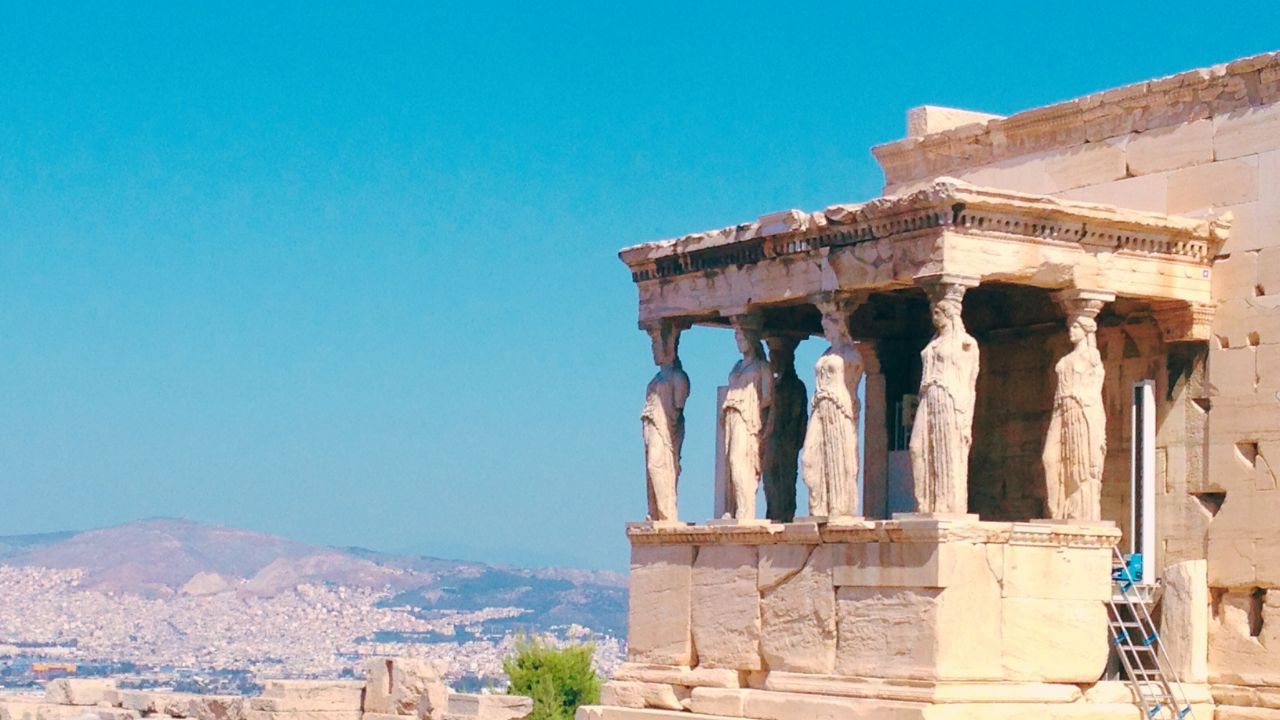
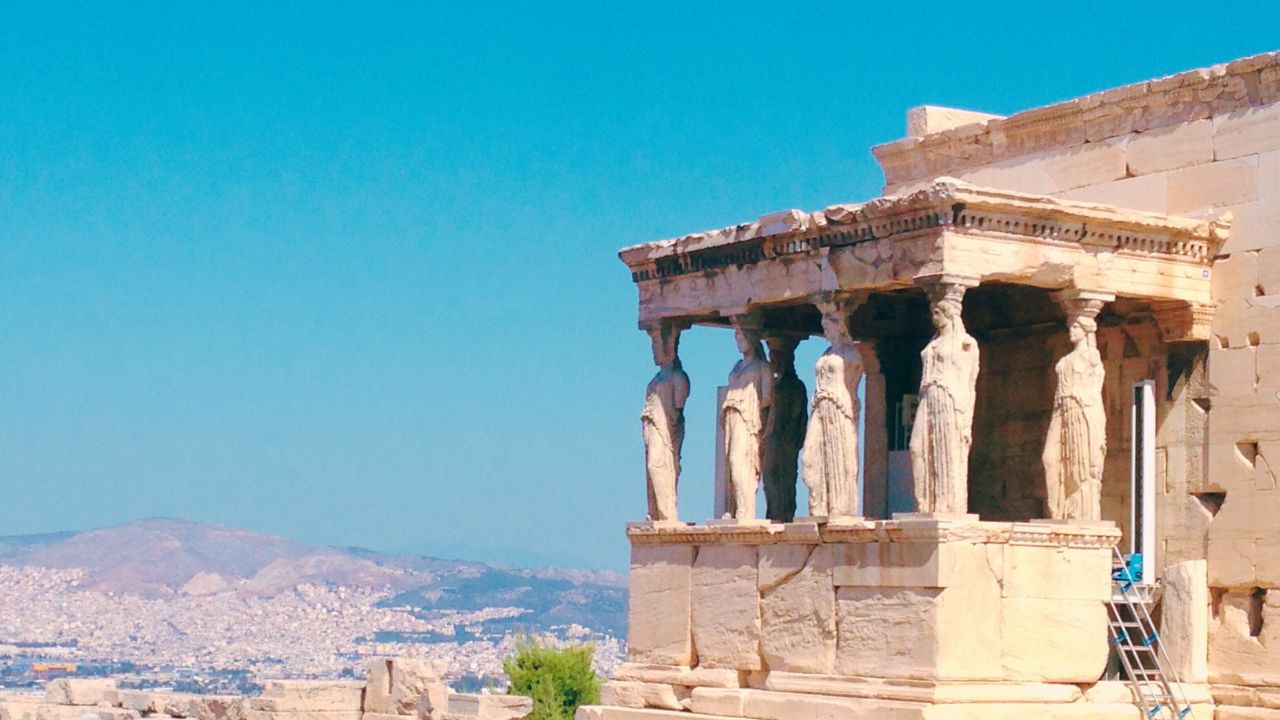 The Erechtheion, Athens. Ancient Greek temples engineered integrated systems where architecture, light, and sacred objects worked together to facilitate direct consciousness transformation. Photo: Angela Sargeant
Why This Matters Now
Understanding this ancient approach helps explain something you've probably felt without being able to name it.
You've likely experienced moments with certain art or spaces where something shifts in your consciousness. Where your awareness opens to something beyond the visual beauty itself. Where you feel held in an experience that continues unfolding rather than ending when you look away.
Then there's art that looks beautiful and feels meaningful, but the experience stays at the surface. Nothing wrong with it, simply serving a different purpose.
This is the difference between representation and integrated function. Between art that points toward spiritual truths and art created as part of complete systems designed for consciousness transformation.
What Changed Between Then and Now
Somewhere between ancient temples and modern spirituality, we forgot about creating complete integrated systems.
Most spiritual art today functions as contemplation: beautiful imagery that inspires, reminds, or represents spiritual truths. Symbols of spiritual concepts. Visual reminders of belief. Decorative expressions of sacred themes.
All valuable. All meaningful at various phases of the journey.
Yet fundamentally different from what temples offered: **complete systems where beauty, intention, timing, space, and sacred processes worked together** to create environments for consciousness transformation.
We've separated the systematic approach from spiritual art itself. We've moved from integrated consciousness technology to beautiful individual objects we own and contemplate.
Even art created with genuine spiritual intention, even art carrying authentic energy, typically exists as isolated pieces rather than expressions of complete engineered systems.
The integrated approach was lost. Those of us who've developed spiritual sensitivity can feel that absence.
Recognizing Integrated Spiritual Technology
So how do you recognize the difference?
Trust your immediate response. When you encounter art created as part of complete spiritual systems, something shifts without effort. The heart opens. Your awareness expands without trying. You want to keep looking because you're receiving something that continues unfolding.
Notice what happens in your body. Does your breathing deepen? Does something release in your chest? Do you feel held in an experience rather than simply observing beauty?
Pay attention to the ongoing relationship. Art created for representation might inspire you once, then become background. Art created as integrated spiritual technology continues working with your consciousness over time. You notice new layers. The experience deepens. Something keeps revealing itself.
By honouring the discernment you've cultivated through your practice. You're recognizing what genuinely serves your consciousness expansion.
For practical guidance on choosing art for your space: Creating Sacred Spaces: Beyond Decoration to Transformation and How to Choose Spiritual Art For Your Sacred Space.
Reviving the Ancient Approach
Through three decades of spiritual practice, I received direct transmission for creating art as living consciousness technology. After receiving this, I was guided to Plato where I discovered the ancient Greeks had understood the same principles. What I'd been channeling, scholars call 'technologies of the sacred' - integrated systems deliberately designed for consciousness transformation.
I was called to revive this: channeled art as integrated spiritual technology.
While I'm not recreating temple architecture, I'm channeling art using the same systematic approach: multiple elements working together deliberately rather than isolated beauty hoping to inspire.
Each Light Energy Art piece is created through processes received in divine transmission, as living spiritual technology channeled for contemporary consciousness. Art that continues working with your consciousness over time, becoming an ongoing portal for transformation in your daily sacred space.
Portable spiritual technology bringing what ancient temples offered into contemporary intentional living. Accessible without pilgrimage, functional in your actual daily environment.
For Those Ready
When you look at spiritual art options, something feels incomplete. Like choosing between beauty that inspires intellectually and depth that transforms experientially.
What you're sensing is the gap between representation and integrated function.
For those whose spiritual practice has become lived experience, for those whose environment matters because you can actually sense energy, the ancient understanding is being revived.
We've been choosing art for what it represents instead of what it does.
Your spiritual sophistication has outgrown decorative reminders. You're ready for tools that actually work.
The question becomes: Does this art create transformation?
The Ancient Approach, Revived
Art to awaken you to your soul's potential. Not through symbols you study, but through beauty engineered as complete spiritual technology.
For those who can feel the difference. For those who've been seeking something deeper without quite knowing what. For those ready to let their environment match the consciousness work they've done.
The ancient approach is being revived: beauty as integrated spiritual technology, transformation as the purpose.
Explore how these ancient principles apply to contemporary intentional living, or view the Light Energy Art collection.
